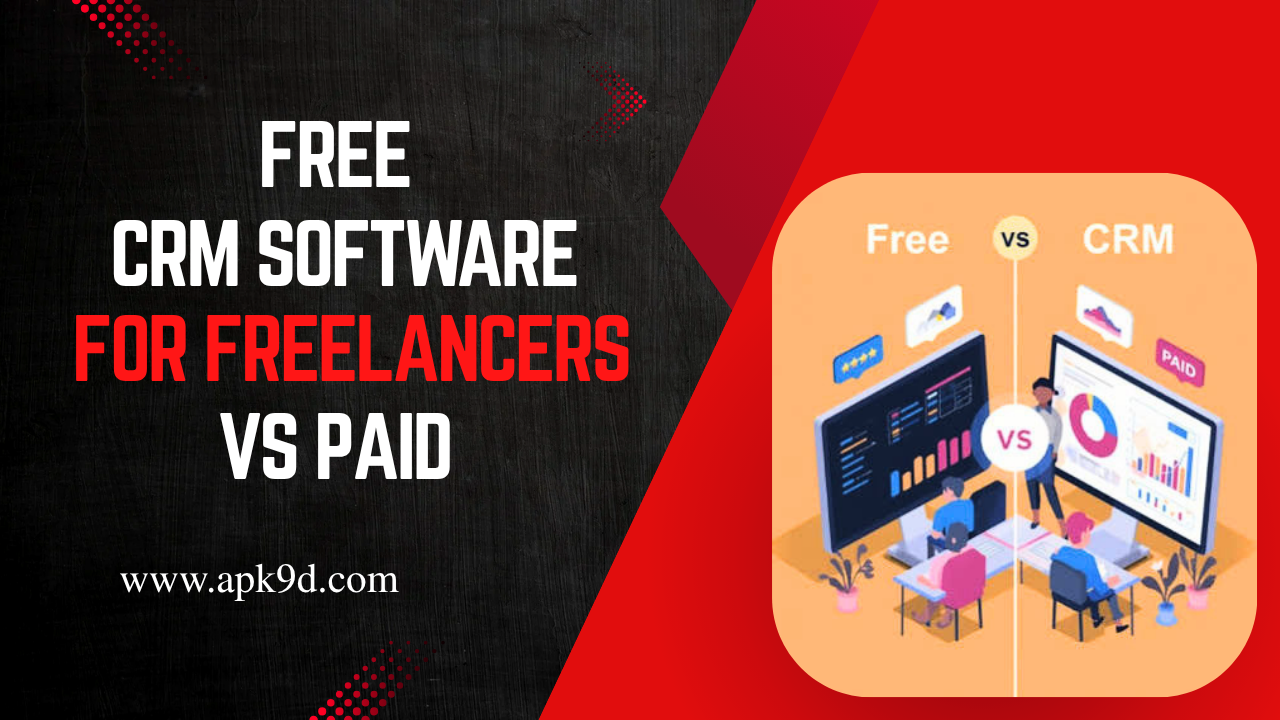
Free CRM Software for Freelancers VS Paid
If you’re freelancing and still tracking clients through a messy inbox and a spreadsheet you keep forgetting to update, you’re not alone — but it’s costing you more than you’d think. Freelancers who lack a proper system for managing client relationships tend to lose real income every year to missed follow-ups, duplicated work, and projects that quietly fall through the cracks. The question isn’t really whether you need a CRM anymore — it’s whether a free one is enough, or whether it’s worth paying for something more capable.
What You Actually Get for Free
The good news is that free CRM tools in 2026 are far more capable than the stripped-down “trial teasers” they used to be. Hub-spot’s free tier stands out in particular — it offers unlimited contacts, a visual sales pipeline, email tracking, meeting scheduling, and even a basic client portal, all at no cost. For a freelancer who mainly needs to keep client information organised and follow up on time, that’s genuinely enough to run a professional-feeling operation.
Zoho CRM’s free plan is another strong option, supporting up to three users along with basic workflow rules — useful if you occasionally bring on a virtual assistant or collaborator. And for freelancers who want something simpler, tools like Capsule CRM focus on ease of use over features, offering clean contact management and calendar tracking without a steep learning curve, typically capped around 250 contacts on the free tier.
Where Free Plans Start to Show Their Limits
The catch with free CRMs isn’t usually contact limits — it’s automation. Hub-spot’s free plan, for example, doesn’t include real workflow automation; unlocking that requires a paid Marketing Hub subscription, and the price jump from there can be steep. This is a common pattern across the industry: free plans handle storage and basic tracking well, but the moment you want the software to actually do the repetitive work for you — automated follow-up sequences, smart deal recommendations, deeper reporting — you hit a paywall.
There’s also a structural limitation worth understanding. Most CRM tools, free or paid, are built purely around contact and pipeline management. They don’t natively connect to project delivery, time tracking, or invoicing. That means many freelancers end up stacking a free CRM with a separate invoicing tool, a project manager, and a time tracker — and those “free” savings can quietly turn into $50 to $150 a month across four or five disconnected subscriptions.
When Paying Actually Makes Sense

This is where all-in-one paid platforms start to look more appealing. Instead of stitching together multiple free tools, some freelancer-focused platforms bundle CRM, proposals, contracts, time tracking, invoicing, and client portals into a single subscription — often for less than what you’d pay stacking separate apps. If you’re already juggling three or four different tools just to run your freelance business, consolidating into one paid platform can actually save money and hours of tool-switching, even though it comes with a monthly bill.
Paid plans also tend to unlock the features that scale with a growing freelance business — deeper automation, custom reporting, AI-assisted email drafting, and smart deal prioritisation based on pipeline activity. If you’re managing enough clients that manual follow-up is becoming unreliable, that automation isn’t a luxury anymore — it’s what prevents leads from going cold.
How to Actually Decide
The honest answer is that the right choice depends on where you are in your freelance business, not on some universal “best” pick:
If you’re early-stage or managing a modest client list, a free CRM like Hub-spot or Zoho is genuinely enough. Import your contacts, set it up over a weekend, and you’re already ahead of most freelancers still relying on spreadsheets.
If you’re consistently earning enough to feel the cost of missed follow-ups, an all-in-one paid platform likely pays for itself by cutting down on lost work and tool-juggling.
If your main pain point is repetitive admin work — chasing invoices, drafting the same follow-up emails — that’s usually the clearest signal that automation, and therefore a paid plan, is worth the money.
Final Thoughts
Free CRMs aren’t a downgrade so much as a starting point — they’re genuinely capable of running a lean freelance operation. But as client volume and admin complexity grow, the free-vs-paid decision usually stops being about cost and starts being about time. At a certain point, the hours saved by automation are worth more than the subscription fee it comes with.